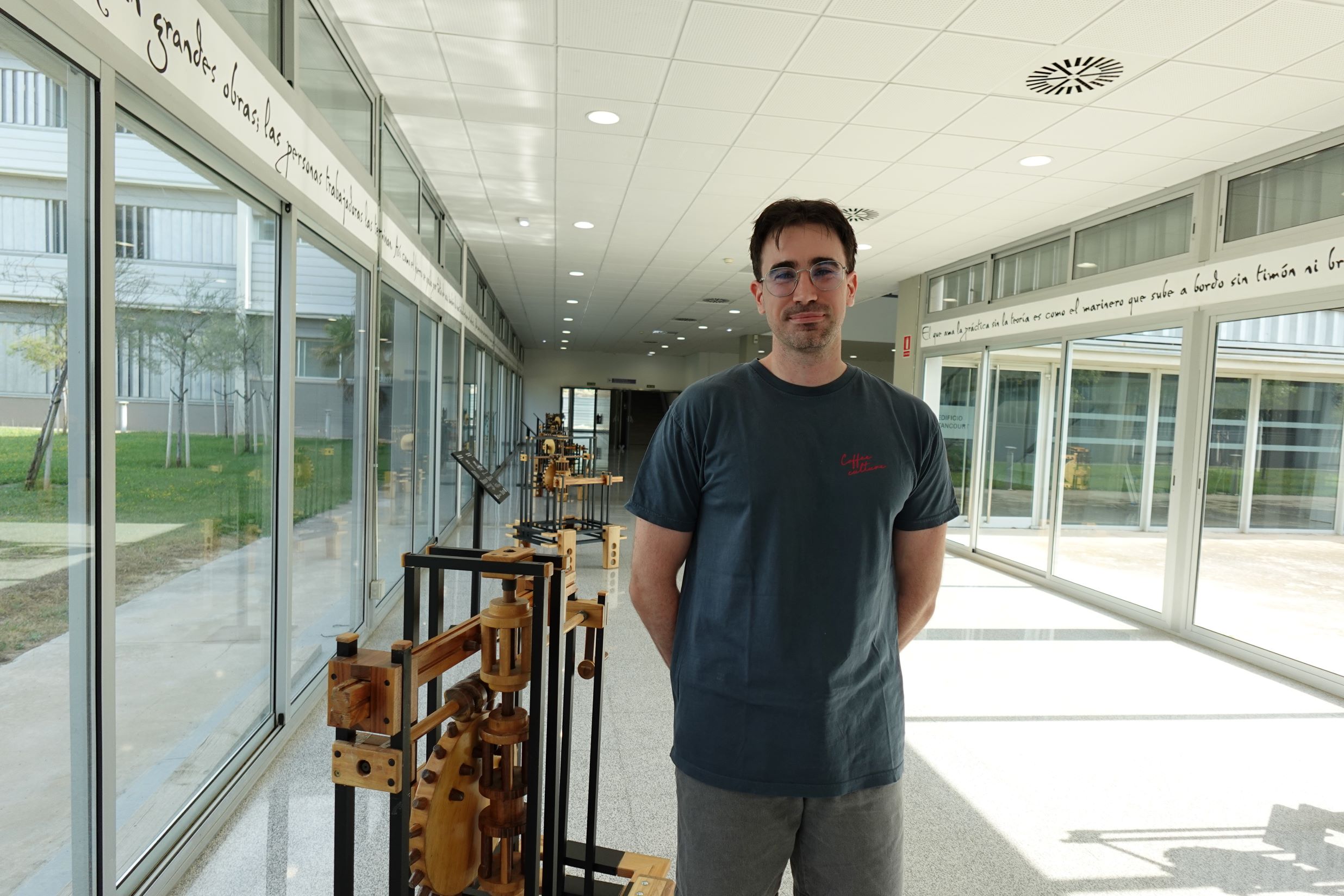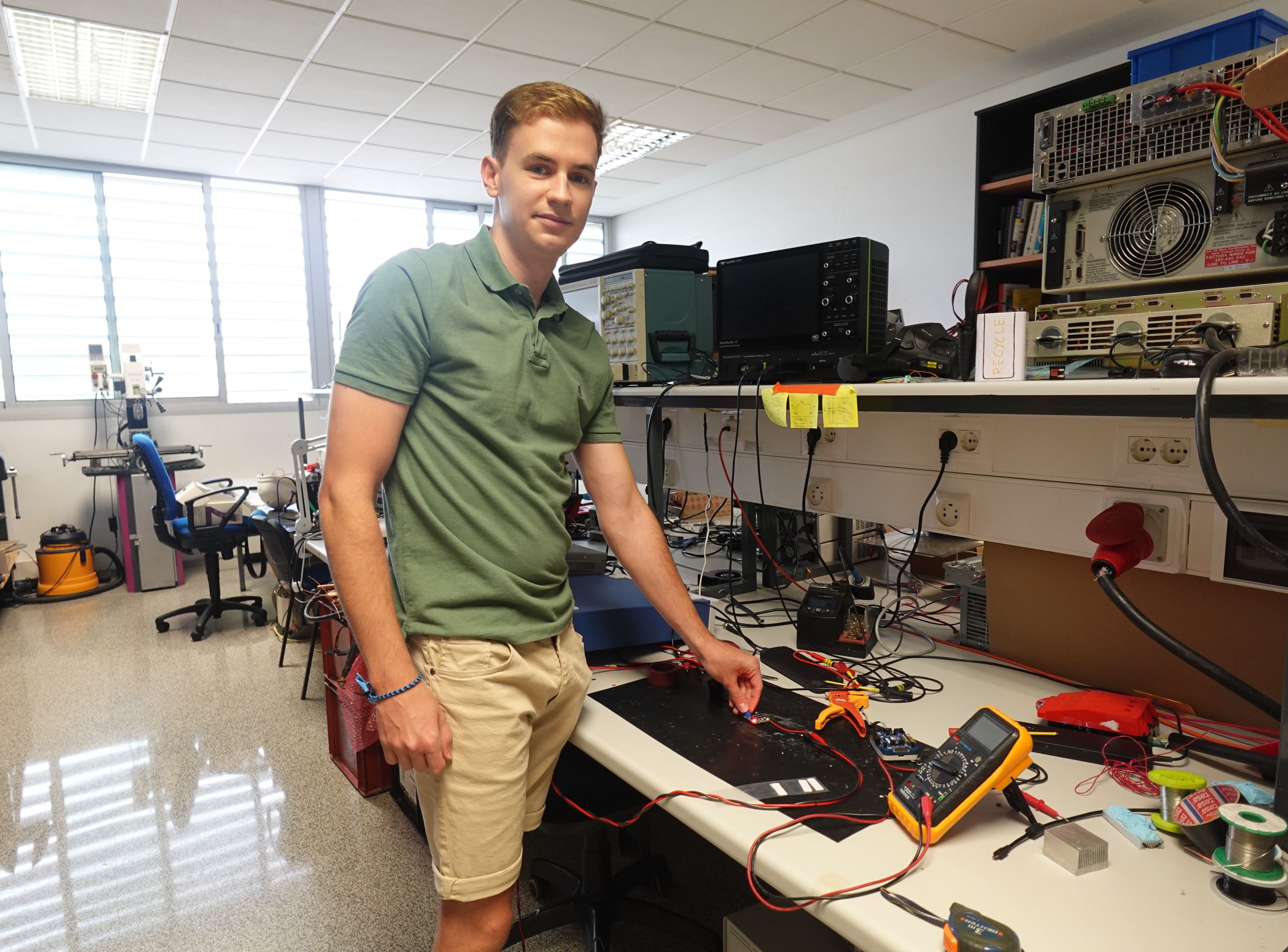
Alejandro Pazvantov, a young researcher at the Aragón Institute of Engineering Research (I3A) at the University of Zaragoza, is investigating how to better control electrical energy. To this end, he designs electronic systems, simulates them, develops the algorithms that control them, builds prototypes and verifies experimentally that they work. He is currently working on his doctoral thesis within the Power Electronics and Microelectronics Group (GEPM) and has just received the ‘Robert S. Ruffini’ award at the International Conference on Electromagnetic Heating, held in Padua, Italy, for a scientific paper on an electronic power converter for domestic induction heating systems. (“Multi-Load Power Electronic Converter for Induction Heating Domestic Applications”).
Alejandro Pazvantov graduated with a degree in Electronic and Automation Engineering in 2023 from the University of Zaragoza. He joined the GEPM in 2023 to undertake his work placement and complete his final-year project. After completing his master’s degree, he began a PhD in Electronic Engineering, specialising in power electronic systems for electric vehicles, under the supervision of researchers Óscar Lucía and Héctor Sarnago.
“Receiving this award is a huge joy and a real honour. There have been many months of work behind this presentation, so this recognition is a reward for all that effort. But it isn’t just mine. Without the support of my supervisors and my colleagues in the group, it wouldn’t have been possible, and that’s why I see it as a shared award,” explains the young researcher.
His research focuses on power electronics applied to electric vehicles and induction heating systems. “I’m passionate about this field because it lies at the heart of the energy transition. Designing more efficient and compact power electronic systems means charging electric vehicles more efficiently and making electrification a reality that is accessible to everyone,” emphasises Alejandro Pazvantov.
The work covers the entire lifecycle of a power electronics system, from concept to prototype. This includes the modelling, analysis and simulation of converters to understand the system before it is built; the implementation of the digital control architecture, designing the algorithms that manage the system in real time; and the assembly and experimental verification of prototypes, to check that the theoretical models work in the laboratory.
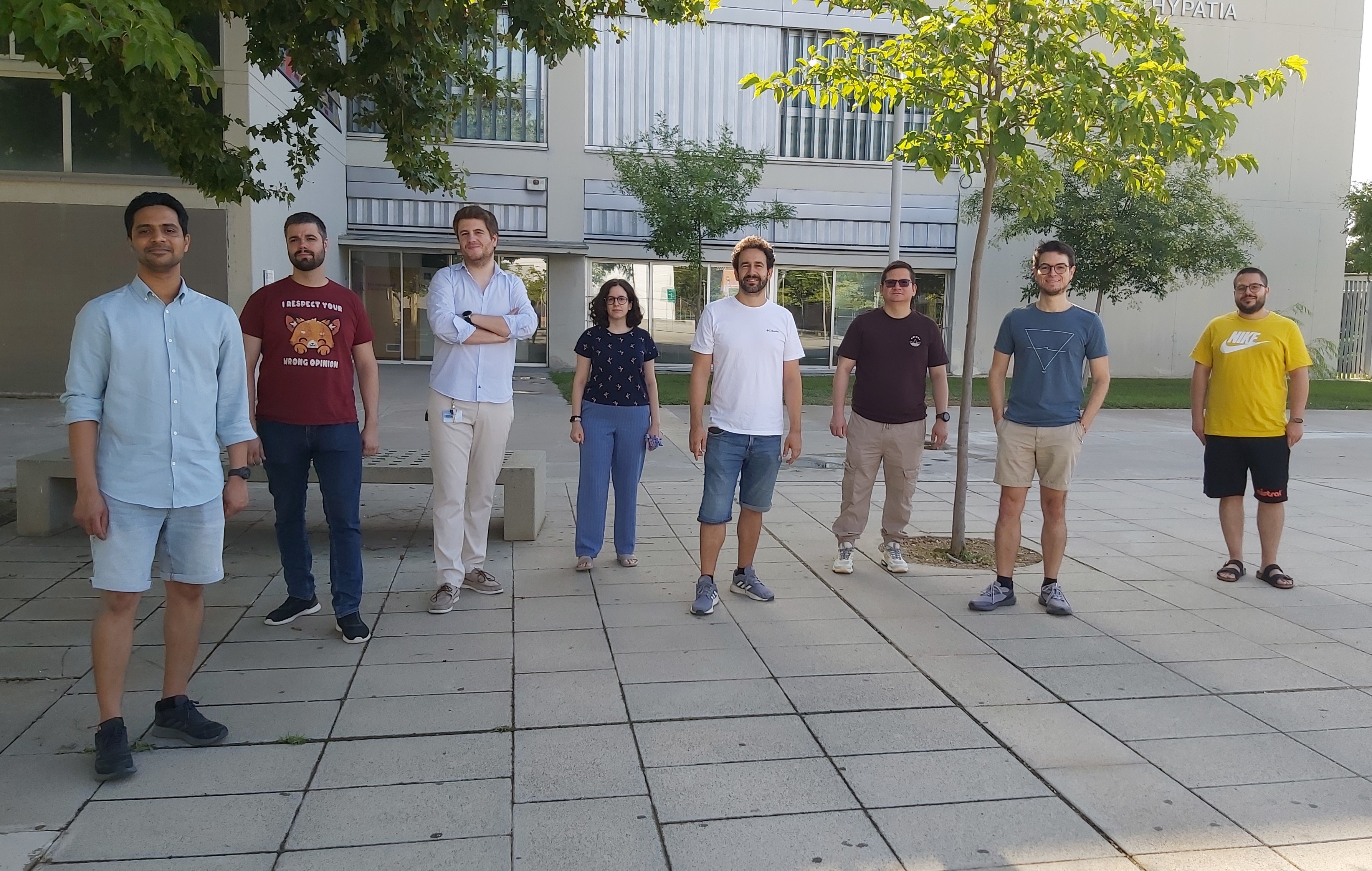
He describes his time with the GEPM research group at the I3A as a “very enriching experience. Working alongside world-class researchers allows me to learn continuously and has taught me to approach problems with rigour. Furthermore, the atmosphere within the group is friendly and collaborative, and that makes the transition from student to researcher much more natural”.
In the short term, Alejandro has a clear goal: to complete his doctoral thesis and delve deeper into the areas of research he is currently working on. Looking ahead, “I would like to continue dedicating myself to research and developing my career at university. That said, I’m keeping my options open. Power electronics plays a huge role in industry, and I’m convinced there are many ways to help bring this technology to society”.
Further information about the conference: https://www.hes2026.org/