A research team led by the Aragón Institute for Engineering Research (I3A) at the University of Zaragoza has carried out a study showing that reducing certain components on the surface of pancreatic cancer cells diminishes their ability to move and adhere to structures that mimic blood vessels.
The study has been published in the scientific journal *Cell Death & Disease*, part of the Nature group, and reports that modifying sugars on the surface of pancreatic cancer cells can cause them to behave less aggressively and, furthermore, increase their vulnerability to an immunotherapy strategy.
The article features contributions from researchers at various institutions. In addition to the Multiscale in Mechanical & Biological Engineering (M2BE) research group at I3A, these include the Aragón Health Research Institute (IIS Aragón) and the University of Girona, amongst others.
Pancreatic cancer has a high capacity for invasion and spread. This research identifies an experimental strategy to target one of the characteristics that promote this behaviour: the excess of sialic acid on the surface of tumour cells.
By blocking the process that enables these molecules to accumulate, the researchers have succeeded in reducing the mobility of cancer cells, hindering their ability to adhere to blood vessels and increasing their vulnerability to CAR-T immune cells in three-dimensional laboratory models.
They have done so using microfluidic models that replicate some of the physical and biological conditions of pancreatic cancer more accurately than conventional cell cultures. These devices enable researchers to study how cells organise themselves and form three-dimensional tumour structures, how they move, how they pass through very narrow spaces, adhere to blood vessels and respond to attacks by immune system cells. With these devices, researchers can observe cellular behaviour in an experimental environment that better replicates some of the physical challenges of pancreatic cancer than a conventional two-dimensional culture.
An experimental study, carried out as part of the European project ICoMICS, using three-dimensional cell models and microfluidic devices. The team has focused on one of the characteristics that promote malignant cell behaviour and cancer progression, known as hypersialylation, and has analysed what happens when this is reduced by an inhibitory compound called Ac53FaxNeu5Ac.
Results
Reduced motility and adhesion. One of the main findings of the study is the reduction in tumour cell migration. In some of the experiments, the migration rate was reduced by up to 54 per cent.
Adhesion to blood vessels decreased by 81 per cent in one of the cell lines studied and by 64 per cent in another.
A possible approach to enhancing the immune response. The researchers carried out experiments with CAR-T cells, a form of immunotherapy that modifies T cells so that they recognise and attack target cells.
In this experimental model, the cytotoxic activity of CAR-T cells against tumour structures increased, reducing their size and viability. This result suggests that modifying the surface of cancer cells could help make them more vulnerable to the immune system’s action.
The authors point out that this trial was carried out using tumour cells that had been modified to express a molecule recognisable by CAR-T cells. Therefore, the results do not demonstrate that this strategy can already be applied as an immunotherapy treatment for pancreatic cancer.
The research team emphasises that it will be necessary to continue studying this strategy in more complex models and to assess its safety and efficacy before considering a possible therapeutic application.
Access to the scientific article: “Targeting hypersialylation in pancreatic cancer microfluidic models reverses its malignant phenotype and enhances CAR-T therapy”. Cell Death & Disease
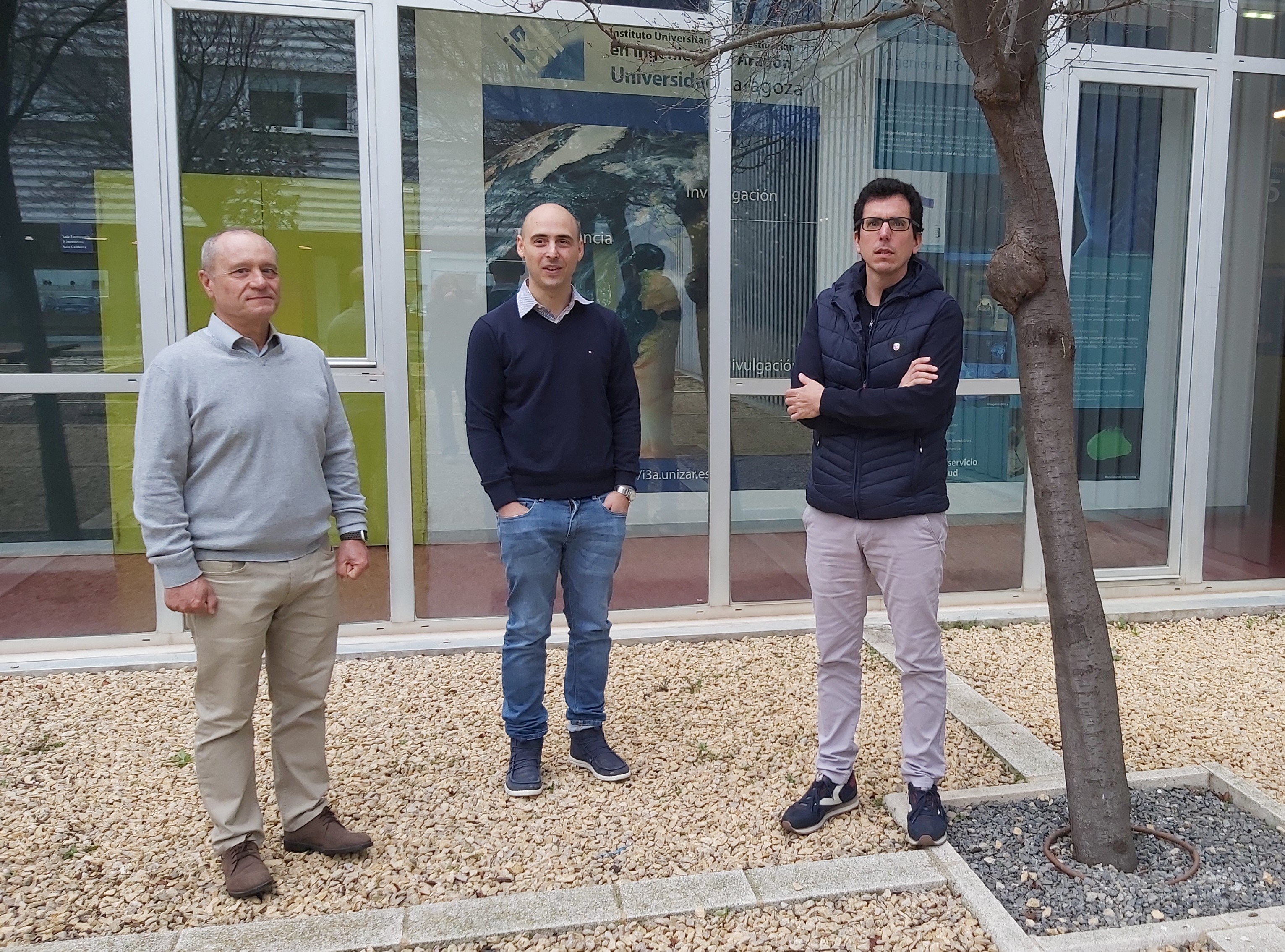
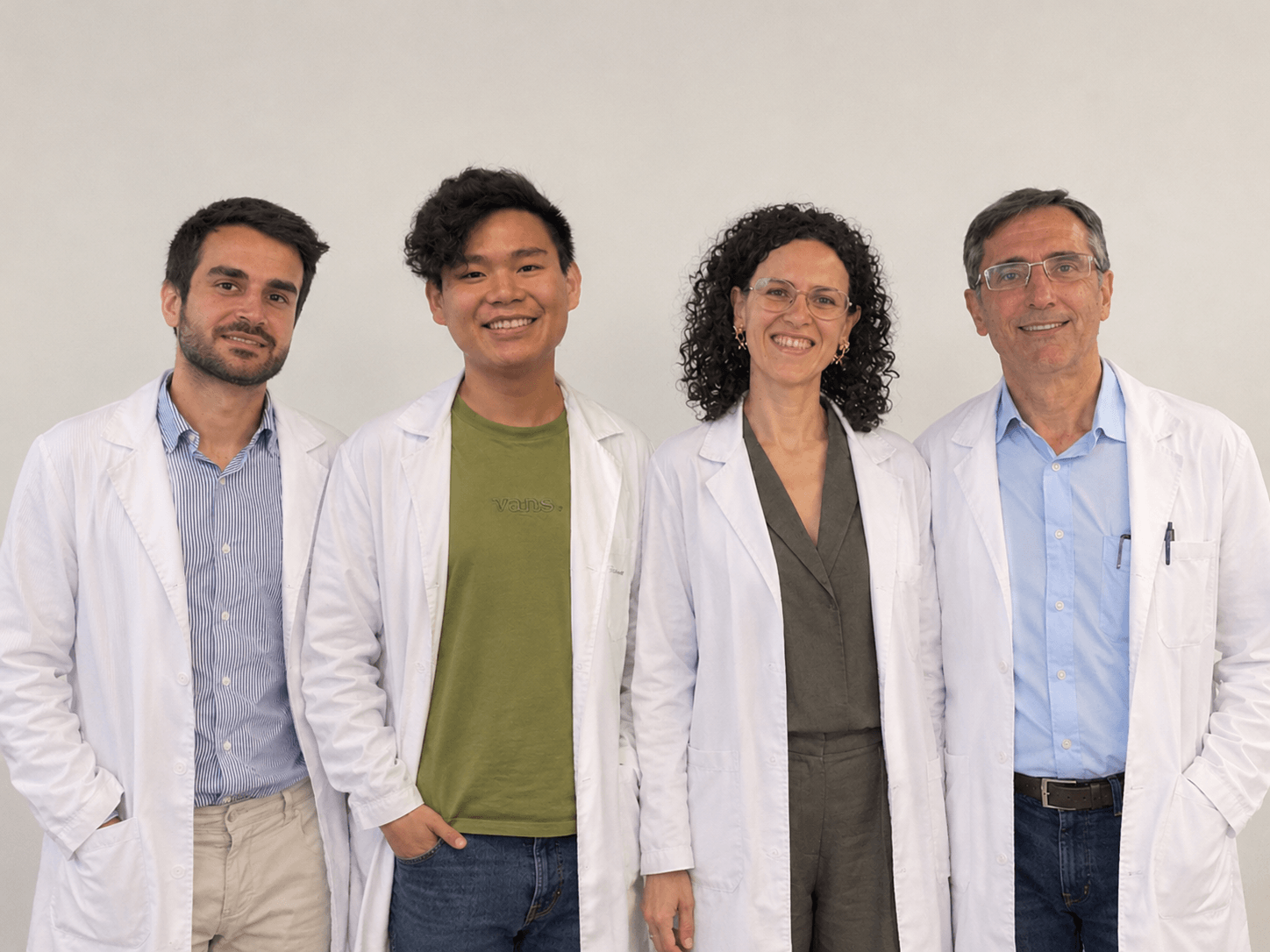
Photograph (edited using AI): Pedro Guerrero, Jack Zhang-Zhou, Soraya Hernández and José Manuel García Aznar, researchers at the I3A who are taking part in this project.