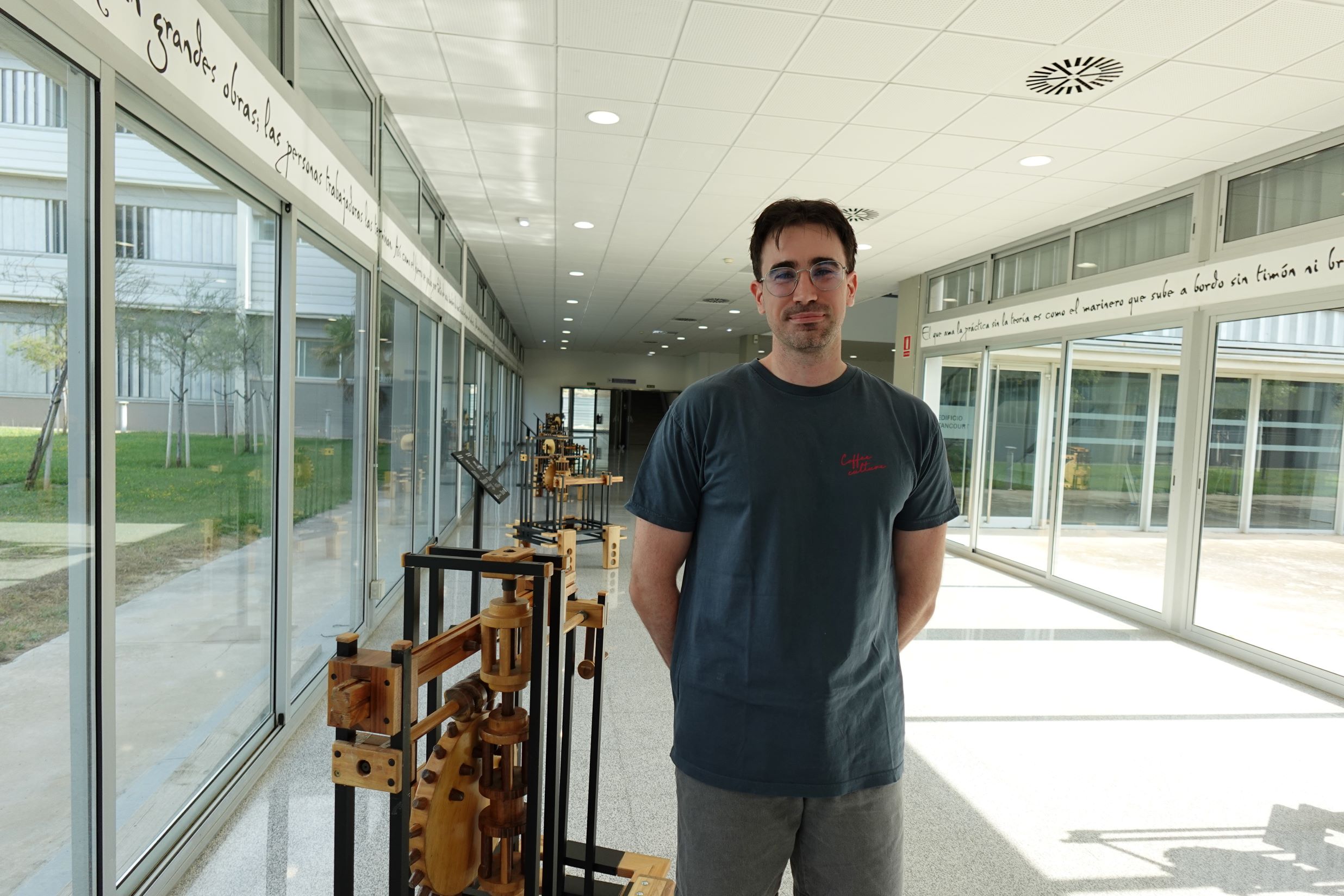
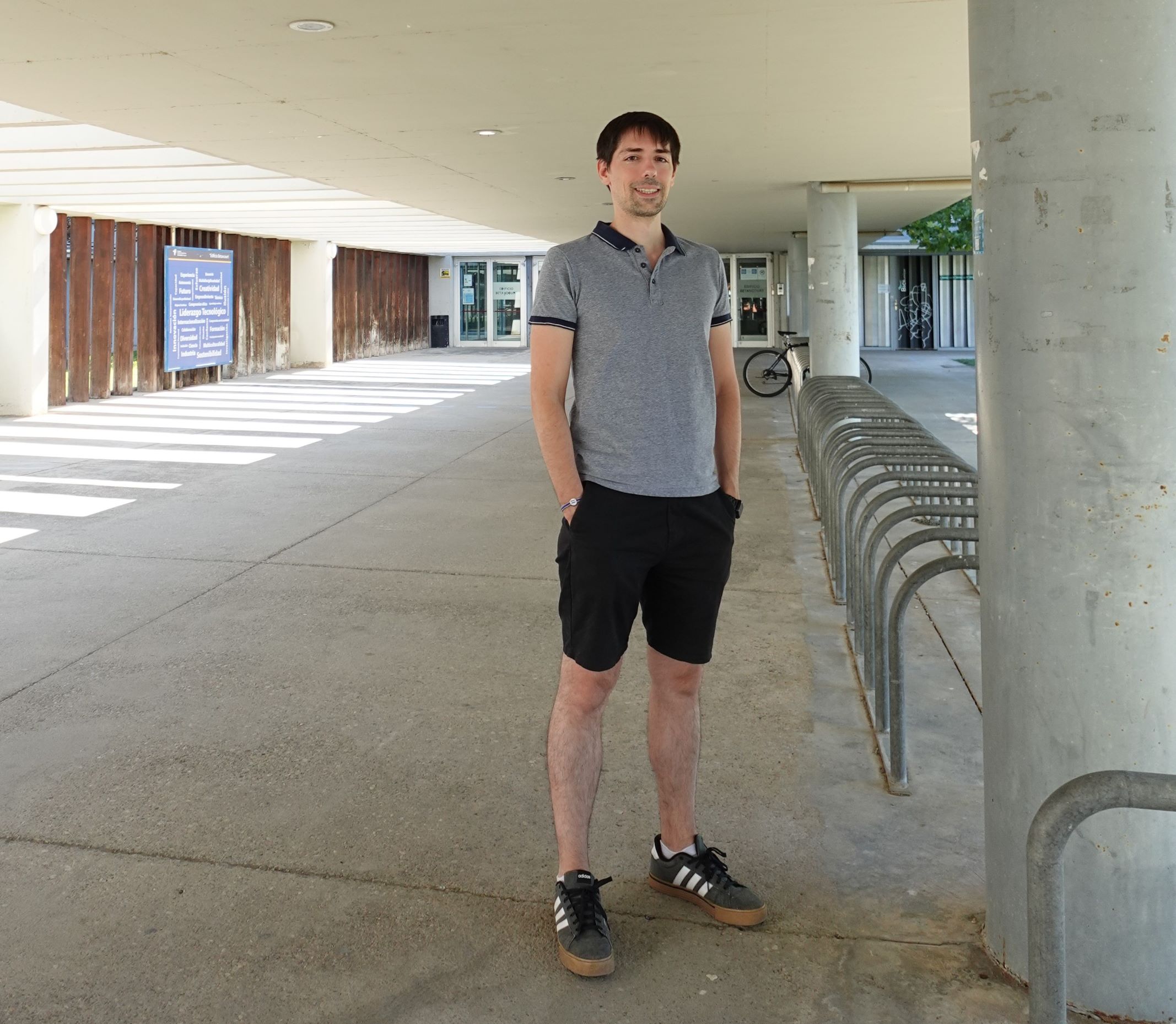
The Royal Spanish Society of Chemistry in Aragon has awarded second prize for the best Master's Thesis to David Ruiz-Alejos, who was also recognised in the competition with Honours. The thesis, entitled ‘Kinetic modelling and simulation of the cyclic process of adsorption and in situ methanation of CO₂ in multifunctional beds’, was funded by one of the I3A student internship grants and was carried out in the Catalysis and Reactor Engineering Group (CREG), led by José Ángel Peña and Víctor Daniel Mercader Plou.
The award-winning project highlights the importance of research into CO₂ capture and recovery processes. ‘Receiving this award from RSEQ-Aragón is validation that the work done has scientific value and real applicability. For me, it is recognition of the effort made throughout the year, but also of the environment that has made it possible, my supervisors and the CREG group at I3A.’
The most relevant aspects of his Master's thesis focus on demonstrating that a multifunctional CO2 capture and conversion process can be rigorously described using relatively simplified kinetic models, provided that their parameters are adjusted using sound statistical criteria and physical consistency. In the adsorption stage, the study showed that mass transfer is the dominant mechanism, with the Veneman model offering the most robust and predictive representation. Meanwhile, in the methanation stage, the asymmetry characteristic of CH4 profiles allowed us to identify that the progressive release of previously adsorbed CO2 governs the dynamics of the system, which justified the use of the EMG model as a descriptive and predictive tool. Overall, ‘the work reinforces the idea that complex processes can be effectively analysed with a small number of parameters, facilitating their interpretation, simulation and potential extrapolation to larger-scale scenarios,’ explains David Ruiz-Alejos.
His immediate future ‘is to continue consolidating my professional development in the field of industrial R&D&I, where I currently work at Saica Flex. This environment allows me to directly apply the scientific and methodological foundation I acquired during my academic career, especially in the analysis, modelling and understanding of complex systems.’
Over the next few years, this young chemical engineer hopes to continue ‘strengthening my technical profile, broadening my experience and always maintaining a vision focused on continuous improvement and generating solutions with practical impact’.
During his time at I3A, where he received one of the grants from the scholarship programme to complete his Master's Thesis, he highlights having found ‘a very professional yet friendly environment, with resources, scientific criteria and a strong culture of “doing things right”. I have gained a great deal of technical knowledge and also had a very good personal experience thanks to the team and the day-to-day work in the laboratory and within the group’.
Photograph: Award ceremony in Zaragoza on 13 February, alongside his TFM supervisors, José Ángel Peña and Víctor Daniel Mercader Plou.